I’m wondering what the part I’ve bolded is referring to. Is Peterson trying to suggest, without saying it out loud, that the Mountain Meadows Massacre was justified?Tom wrote: ↑Fri Sep 04, 2026 1:15 amEpisode 32: “Religious Kindred & Savage Enemies”
Here’s the clunky dialogue that opens the episode:John Wilson: How crazy is this [his voice cracking]? What’s the point of living in Utah if you can’t be surrounded by neat things.
Camrey Fox: Well, you know, you couldn’t always just hop on a road and drive here, John.
John Wilson: Don’t bring me down. I would have arrived on a horse.
Camrey Fox: I’m sure you would have.
John Wilson: What do you think? Do we just knock?
Camrey Fox: It’s actually open.
[Peterson appears from behind the fort’s large door]
John Wilson: Oh, hey, Dan.
Dan Peterson: So you made it.
John Wilson: Indeed, we did. Excited for the episode today. I got to interview Dr. John Peterson, and he had some crazy things to share about the conflicts between the Native Americans and early Saints.
Dan Peterson: Pretty eye-opening, isn’t it?
John Wilson: Yeah.
Camrey Fox: I’m guessing when you say conflicts, you’re not just talking about arguments.
John Wilson: No. No. There were some tragic affairs.
Dan Peterson: So do you think you have a better understanding now of why?
John Wilson: Yeah, and that was, I think, was the most elucidating thing. It was like, it’s not a black and white history. It’s gray. It’s muddled. It’s confusing. And both sides have justifications for their actions.
Dan Peterson: It’d be nice to be able to choose one side and say they were completely right, and these were completely wrong. You can’t do it.
John Wilson: And even Brigham admits to making mistakes.
Dan Peterson: Yeah. Well, OK, so let’s go on in.
Torches at High Noon: A Fog Machine, Power Lines, An Angry Extra and Brigham Young’s Electric Boogaloo
-
I Have Questions
- God
- Posts: 4581
- Joined: Tue May 23, 2023 9:09 am
Re: Torches at High Noon: A Fog Machine, Power Lines, An Angry Extra and Brigham Young’s Electric Boogaloo
Premise 1. Eyewitness testimony is notoriously unreliable.
Premise 2. The best evidence for the Book of Mormon is eyewitness testimony.
Conclusion. Therefore, the best evidence for the Book of Mormon is notoriously unreliable.
Premise 2. The best evidence for the Book of Mormon is eyewitness testimony.
Conclusion. Therefore, the best evidence for the Book of Mormon is notoriously unreliable.
-
drumdude
- God
- Posts: 8173
- Joined: Thu Oct 29, 2020 5:29 am
Re: Torches at High Noon: A Fog Machine, Power Lines, An Angry Extra and Brigham Young’s Electric Boogaloo
Reminds me of when our president said “there are bad people on both sides.”
-
Doctor Scratch
- B.H. Roberts Chair of Mopologetic Studies
- Posts: 1788
- Joined: Wed Oct 28, 2020 7:24 pm
- Location: Cassius University
Re: Torches at High Noon: A Fog Machine, Power Lines, An Angry Extra and Brigham Young’s Electric Boogaloo
Wow, Tom. It would appear that the Mopologists have reached new levels of desperation. They are going full-blown racist in an effort to attract viewers, and guess what? It worked! This episode has a huge uptick in viewers. Refer to Native people as “savages” and the viewers will come pouring in.Tom wrote: ↑Fri Sep 04, 2026 1:15 amEpisode 32: “Religious Kindred & Savage Enemies”
It’s not clear to me why “savage enemies” is part of the episode title. Is it intended to reflect historical rhetoric? For example, did early LDS colonists in Utah often describe the native peoples of Utah as “savage enemies”? The title above the YouTube video is slightly different: “Religious Kindred but Savage Enemies?” Is the episode meant to challenge that historical rhetoric or understanding? If “savage enemies” is intended to indicate animosity and conflict between Mormons and native peoples of Utah, different language should have been used. The term savage carries a great deal of baggage inasmuch as it has been used by colonists for centuries to disparage native Americans, to portray them as backward and uncivilized, and to justify displacement, taking land, and violence. Unfortunately, the episode doesn’t address use of the term and why it’s problematic.
I cannot help but wonder what was said in the pre-production meeting for this episode.
"If, while hoping that everybody else will be honest and so forth, I can personally prosper through unethical and immoral acts without being detected and without risk, why should I not?." --Daniel Peterson, 6/4/14
-
Tom
- God
- Posts: 1190
- Joined: Mon Oct 26, 2020 3:41 pm
- Location: Sego, Utah
- Contact:
Re: Torches at High Noon: A Fog Machine, Power Lines, An Angry Extra and Brigham Young’s Electric Boogaloo
Yes, the episode seems to be one of the most-viewed episodes in the entire series. But I seriously doubt that executive producer Daniel Peterson or the Interpreter Foundation will acknowledge the issue. The important thing is to keep cranking out more Interpreter articles (the latest one is titled “Glaciers, Plant Succession, and the Sheer Wonder of It All”), podcasts, films, and Bowdlerizing Brigham episodes.Doctor Scratch wrote: ↑Sat Sep 05, 2026 2:07 amWow, Tom. It would appear that the Mopologists have reached new levels of desperation. They are going full-blown racist in an effort to attract viewers, and guess what? It worked! This episode has a huge uptick in viewers. Refer to Native people as “savages” and the viewers will come pouring in.Tom wrote: ↑Fri Sep 04, 2026 1:15 amEpisode 32: “Religious Kindred & Savage Enemies”
It’s not clear to me why “savage enemies” is part of the episode title. Is it intended to reflect historical rhetoric? For example, did early LDS colonists in Utah often describe the native peoples of Utah as “savage enemies”? The title above the YouTube video is slightly different: “Religious Kindred but Savage Enemies?” Is the episode meant to challenge that historical rhetoric or understanding? If “savage enemies” is intended to indicate animosity and conflict between Mormons and native peoples of Utah, different language should have been used. The term savage carries a great deal of baggage inasmuch as it has been used by colonists for centuries to disparage native Americans, to portray them as backward and uncivilized, and to justify displacement, taking land, and violence. Unfortunately, the episode doesn’t address use of the term and why it’s problematic.
I cannot help but wonder what was said in the pre-production meeting for this episode.
The next episode features excerpts from an interview with Forrest Cuch. Peterson commented on the interview more than a year ago:
In a subsequent comment, however, Peterson undercut the value of his interview with Cuch:In the evening, I interviewed Forrest S. Cuch, the former education director for the Ute Indian Tribe and the former administrator of the Wampanoag Tribe in Massachusetts. For many years thereafter, he served as director of the Utah Division of Indian Affairs. We did the interview on the top floor of the Natural History Museum of Utah, among the exhibits related to the Native American inhabitants of Utah prior to 1847. Mr. Cuch, who is a member of the Uinta band of the Ute Tribe, provided a rather dispiriting view of relations between Latter-day Saints and the Utes, historically and today. Certainly a sobering one.
The “white Latter-day Saint historians” that Peterson refers to are Paul Reeve and John Peterson.Ironically, although my interview late Tuesday afternoon with a member of the Ute Tribe wasn't very helpful in terms of history - I gained much more insight from him into contemporary discontents - the two earlier interviews, with a pair of white Latter-day Saint historians, helped me very much to understand why there was friction between the nineteenth-century LDS settlers and the Native Americans.
“We live by faith, not by sight” (2 For. 5:7 NIV).
-
I Have Questions
- God
- Posts: 4581
- Joined: Tue May 23, 2023 9:09 am
Re: Torches at High Noon: A Fog Machine, Power Lines, An Angry Extra and Brigham Young’s Electric Boogaloo
Do we know why Peterson chose to reference the skin colour of the Latter-day Saint historians? Why not refer to them simply as Latter-day historians? What point was he trying to make, that Native Americans cannot be trusted to give a compelling account of their own history?Tom wrote: ↑Sat Sep 05, 2026 4:22 pmIn a subsequent comment, however, Peterson undercut the value of his interview with Cuch:The “white Latter-day Saint historians” that Peterson refers to are Paul Reeve and John Peterson.Ironically, although my interview late Tuesday afternoon with a member of the Ute Tribe wasn't very helpful in terms of history - I gained much more insight from him into contemporary discontents - the two earlier interviews, with a pair of white Latter-day Saint historians, helped me very much to understand why there was friction between the nineteenth-century LDS settlers and the Native Americans.
Premise 1. Eyewitness testimony is notoriously unreliable.
Premise 2. The best evidence for the Book of Mormon is eyewitness testimony.
Conclusion. Therefore, the best evidence for the Book of Mormon is notoriously unreliable.
Premise 2. The best evidence for the Book of Mormon is eyewitness testimony.
Conclusion. Therefore, the best evidence for the Book of Mormon is notoriously unreliable.
-
drumdude
- God
- Posts: 8173
- Joined: Thu Oct 29, 2020 5:29 am
Re: Torches at High Noon: A Fog Machine, Power Lines, An Angry Extra and Brigham Young’s Electric Boogaloo
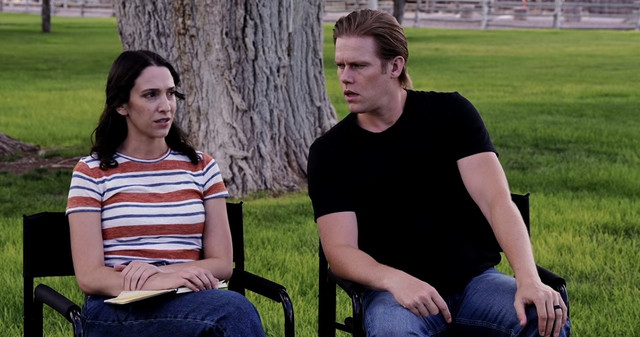
That feeling when it sets in you’re only half way through this massive boring endeavor.
-
Everybody Wang Chung
- God
- Posts: 3957
- Joined: Wed Oct 28, 2020 1:52 am
Re: Torches at High Noon: A Fog Machine, Power Lines, An Angry Extra and Brigham Young’s Electric Boogaloo
Those two actors look like they are going to kill the Proprietor, or they just remembered Becoming Brigham is permanently pinned to the top of their IMDB.com pages.
"I'm on paid sabbatical from BYU in exchange for my promise to use this time to finish two books."
Daniel C. Peterson, 2014
Daniel C. Peterson, 2014
-
Tom
- God
- Posts: 1190
- Joined: Mon Oct 26, 2020 3:41 pm
- Location: Sego, Utah
- Contact:
Re: Torches at High Noon: A Fog Machine, Power Lines, An Angry Extra and Brigham Young’s Electric Boogaloo
I recently watched episode 33, which is titled "From Stolen Shirt to Open War?"
Here’s the official synopsis of the episode:
In episode 33, John Peterson says:
Instead, the episode moves to an exchange between Camrey Fox, John Wilson, and Daniel Peterson:
The exchange continues:
Here are some links to information and records related to Fort Utah:
Brigham Young Orders Killing of Native Americans
Special Order No. 1
Special Order No. 3
According to the KUER story, “Timpanogos Nation people want The Church of Jesus Christ of Latter-day Saints or Gov. Spencer Cox to publicly apologize and rescind the extermination orders.” Will that happen?
I recently watched episode 34, "Feed Them, Don't Fight Them?" (I should note an odd inconsistency between the titles of certain episodes given on the Interpreter website and the titles in the actual YouTube videos. Should there be a question mark in the title or not?)
Here is the official synopsis:
Kimball's words regarding the land were self-serving.
The language quoted by Wilson actually comes from a letter from the Mormon first presidency in November 1850. The letter, sent to John Bernhisel, read in part:
The letter continues:
The episode features Forrest Cuch's response to a question from Daniel Peterson:
Here’s the official synopsis of the episode:
Here’s some background on this period from a March 2026 KUER article:How did a stolen shirt turn a mission to the Native Americans into two decades of war?
What would Utah history have looked like if the Saints and the Utes had treated sharing and consecration as a conversation instead of a one-way religious task?
A relatively peaceful first two years in the Salt Lake Valley—which at the time was a buffer zone between Native American tribes—gave way to armed conflict as settlement pushed into Utah Valley. Fort Utah was built near the religious and economic heart of the Native lands. A clash over a stolen shirt ended with the killing of a Native American man. The Utes demanded the perpetrator be handed over. Brigham Young, unaware of the shirt incident, consulted non-Mormon officers from the Stansbury expedition and sent Daniel H. Wells and a few hundred Nauvoo Legion men south. He later said the Spirit had told him to be patient, but he yielded to a “show of force.” Historian John Peterson calls that decision nearly fatal to Mormon–Ute relations; serious fighting continued for about twenty years in Utah and longer across the West. Peterson quotes the John Turner line that Mormons paradoxically saw Indians as both religious kindred and savage enemies.
“An LDS pioneer-era extermination order still weighs on the Timpanogos Nation,” KUER, Mar. 2, 2026.Before the early Latter-day Saint settlers arrived [in Utah Valley], there were far fewer trees in the valley and many more Native Americans. Historians estimate there were 20,000 Native people in Utah at the time. The Timpanogos Nation says there were about 70,000 along the Wasatch Front from the Bear River all the way down to Mount Nebo.
Everything changed when the newcomers built Fort Utah. Suddenly, there was competition for resources in the Utah Valley, and animosity grew.
A big turning point came in an argument over a shirt. In the summer of 1849, near what’s now called the Provo River, three settlers came upon a Native man they had nicknamed “Old Bishop.” He wore a shirt that they accused him of stealing from a clothesline. He said he had traded fairly for it and refused to give it back.
They took the shirt off forcefully, and one of the men shot him, said historian D. Robert Carter, author of “Founding Fort Utah.”
“And then to make things worse, they took his body, eviscerated him and put rocks in his cavity where his stomach had been and sank him in the river, hoping that it would put him out of sight,” Carter said. “But it didn't.”
The Timpanogos people demanded that the settlers turn the killer over. They refused. The Native Americans then demanded compensation in the form of goods. Again, the settlers refused.
Over the next several months, conflict escalated as the Latter-day Saints expanded their settlement and Native people stole crops and shot at livestock they saw as trespassing on their land. So the pioneers asked their prophet and elected governor of the provisional State of Deseret, Brigham Young, what to do.
“I say, go and kill them,” Young said in a meeting about the issue.
That resulted in Special Orders Nos. 1 and 2 issued by the commanding officer, Daniel H. Wells, who was also the provisional state’s attorney general. The territorial militia was ordered to put a stop to “all hostile Indians, exterminating such as do not separate themselves from their hostile clans and sue for peace.”
A two-day battle ensued at a nearby Timpanogos village in February 1850. … The villagers eventually fled, and the settlers pursued them, killing more while others died from exposure. The tribal nation says the militia also took and executed some prisoners.
At least 40 Native people were killed, Carter said, but there were probably more deaths that weren’t recorded. The tribal nation believes it may actually be more than 100.
One of those killed was Chief Old Elk. After his death, the settlers decapitated him and displayed his head in the fort. His wife then climbed the cliffs of Rock Canyon to escape the settlers and either purposefully or accidentally fell to her death. As the story goes, settlers named the peak after her with a derogatory term, Squaw Peak. It was renamed in 2022 to Kyhv Peak.
According to Carter’s research, the Timpanogos killed only a single settler in battle. It’s a wonder any of the Native people survived, Carter comments in his book, because the Timpanogos lost almost everything in the middle of a harsh winter.
In episode 33, John Peterson says:
It's not clear what John Peterson means when he refers to "this event." What happened at Fort Utah? Inexplicably, the episode fails to provide specific information regarding the events of February 1850 and immediately thereafter. How many members of the Mormon militia were injured and killed? How many members of the Timpanogos Nation were injured and killed? What was the outcome? Viewers are not informed. Why not?Brigham Young is the governor of the Territory of Utah. In his official capacities, consulting with these [non-Mormon American] military officers, and I’m not trying to blame one side or the other, but the American way is, "Let the Indians know they can’t do this," and they urged Brigham Young to go down with a show of force. He still doesn’t know about the shirt, doesn’t know about [Old] Bishop. He just knows there’s conflict. So Brigham Young makes a decision to send Daniel H. Wells, who is the leader of the Nauvoo Legion, the Mormon army, down with two or three hundred men to calm things down. Brigham Young later admits, "I felt the Holy Spirit tell me I should be patient, I should be calm, and I gave in to the urgings of men.” And what’s going to happen is this event is going to almost destroy Mormon opportunities with the Utes and other Indians of Utah.
Instead, the episode moves to an exchange between Camrey Fox, John Wilson, and Daniel Peterson:
Note that Daniel Peterson places an apologetic spin on the history with his comment that “if anything, you could argue that in some respects Utah is a little better, but it’s true everywhere.” He's done the same thing in previous episodes.Camrey Fox: Wow, that is devastating.
Dan Peterson: Yeah, it’s tragic, and it only gets worse from there. There will be battles and deaths and so on for the next 20 years, two decades, lots of losses on both sides.
John Wilson: And that’s not just Utah. That’s the American West in general, right?
Dan Peterson: Right.
John Wilson: It’s not some unique thing conflict in Utah.
Dan Peterson: In fact, if anything, you could argue that in some respects Utah is a little better, but it’s true everywhere.
Camrey Fox: Yeah, and not kind to either group at that time.
Dan Peterson: Indian wars throughout the region continue for another 30 years.
John Wilson: Really?
Dan Peterson: Yeah, 30 years.
The exchange continues:
Recall that I previously questioned the title of episode 32, "Religious Kindred but Savage Enemies?" I wrote:Camrey Fox: What was the turning point from the Latter-day Saints wanting to share the message of the gospel and sending missionaries to then sending armed Saints against the Native Americans?
Dan Peterson: It’s a great question. I mean, it’s obviously not what the Saints wanted. So they came out wanting to preach the gospel. You know, they had the Book of Mormon that taught them certain things about Native Americans, but it didn’t work out as well as they had hoped. Still, they continued to try to teach the gospel with some success. Here’s a passage from John Turner, who’s a non-Latter-day Saint historian and a biographer of Brigham Young who said, "Mormons saw Indians simultaneously as religious kindred and as savage enemies." That captures the dichotomy–
John Wilson: The paradox, right?
Dan Peterson: The paradox there, yeah. Long before the Saints, the Puritan ministers came to the Eastern seaboard of the United States, tried to convert the native population to Christianity, but there again, it ended up being brutal wars, conflicts, which again was not what they had hoped for and not what they had intended.
Camrey Fox: And I imagine a large part of it is because these Saints were coming in with a totally different culture, and so very much so disrupting the Native Americans’ way of life.
Dan Peterson: Yeah, I think the cultural clash is really, really important. And the fact is neither side is guiltless entirely, and neither side really understood the other.
Camrey Fox: Right.
I found it odd and confusing that Daniel Peterson read the sentence that inspired the title of episode 32 in episode 33. The full sentence in John Turner’s Pioneer Prophet—“In ways reminiscent of other European-Americans before them, the Mormons saw the Indians simultaneously as religious kindred and savage enemies” (p. 209)—should have been read in episode 32 as a framing device for the episodes to follow.It’s not clear to me why “savage enemies” is part of the episode title. Is it intended to reflect historical rhetoric? For example, did early LDS colonists in Utah often describe the native peoples of Utah as “savage enemies”? The title above the YouTube video is slightly different: “Religious Kindred but Savage Enemies?” Is the episode meant to challenge that historical rhetoric or understanding? If “savage enemies” is intended to indicate animosity and conflict between Mormons and native peoples of Utah, different language should have been used. The term savage carries a great deal of baggage inasmuch as it has been used by colonists for centuries to disparage native Americans, to portray them as backward and uncivilized, and to justify displacement, taking land, and violence. Unfortunately, the episode doesn’t address use of the term and why it’s problematic.
Here are some links to information and records related to Fort Utah:
Brigham Young Orders Killing of Native Americans
Special Order No. 1
Special Order No. 3
According to the KUER story, “Timpanogos Nation people want The Church of Jesus Christ of Latter-day Saints or Gov. Spencer Cox to publicly apologize and rescind the extermination orders.” Will that happen?
I recently watched episode 34, "Feed Them, Don't Fight Them?" (I should note an odd inconsistency between the titles of certain episodes given on the Interpreter website and the titles in the actual YouTube videos. Should there be a question mark in the title or not?)
Here is the official synopsis:
I wish to comment on a few segments of the episode:Could the sentiments that “it’s cheaper to feed them than fight them” and “this is their home” exist at the same time in the same person who also called Native American life idle and refused to leave the lands in Utah?
This episode explores Brigham Young’s Utah Indian policy after the first bloodshed. Historian John Peterson describes how Brigham tried raising a standard of peace, with more than a hundred cattle sent to a reservation in late 1865. But Ute raids kept emptying Mormon fields and herds. When peace offerings did not stop the war, the policy shifted: villages were to “fort up,” cattle would be defended, and Captain Moroni became the model. Brigham’s stance toward the Native Americans was complicated. He would say the Utes had as much right to call the land theirs as anyone, that they had buried their dead there, and that the Saints had taken the hunting grounds—and in the same breath insist the Saints were not intruders but were led there by providence and would not leave. Lisa Olsen Tait’s counsel closes the moral frame: it is not the historian’s job to sort Brigham into good or evil, but to understand him in his own time and grant historical figures the charity we would all want from our own posterity.
First, let me note that Brigham Young did not make the quoted statement. In a meeting of Latter-day Saints held on the morning of August 1, 1847--shortly after the Mormons began arriving in Salt Lake Valley--Heber C. Kimball reportedly told the attendees "not to dispose of their guns and ammunition to the Indians, as some had already done, for they would use the weapons thus obtained for shooting the cattle of the settlers. He referred to the fact that some of the visiting Indians had stolen guns the day previous, and told the brethren to be on the watch against a repetition of such things." Young was not present at the meeting due to illness. Kimball "discouraged the idea of paying the Indians for the lands, for if the Shoshones should be thus considered, the Utes and other tribes would claim pay also." "The land," Kimball reportedly said, "belongs to our father in heaven, and we calculate to plow and plant it; and no man will have power to sell his inheritance, for he can not remove it; it belongs to the Lord. We will all have farms and cultivate them and plant vineyards; and if we are faithful, five years will not pass away before we are better off than we ever were in Nauvoo" (Journal History, Aug. 1, 1847).Dan Peterson: It’s a constant battle for Brigham. His hopes of quickly converting the Native Americans were soon frustrated among the conflicts and the struggle, the struggle’s surely to survive in a way in this new territory for his people. I think I sent you, John, a couple of quotations that are relevant to this.
John Wilson: So Brigham says regarding the land, right, where we’re settling, it said, "The land belongs to our Father in Heaven, and we calculate to plow and plant, and no man will have power to sell his inheritance, for he cannot remove it. It belongs to the Lord." So we’ve got this mentality that it’s not ours, it’s God’s land, he’s given it to us. But I also remember that Brigham was famous for this philosophy, the quote is, "It’s cheaper to feed them than fight them."
Kimball's words regarding the land were self-serving.
Credit to Fox for making the (entirely uncontroversial) observation that the "Book of Mormon lens has oftentimes led to problems of racism and race discrimination." Why does Peterson push back?John Wilson: Which gets us to the second quote you sent, where Brigham says, "We would have taught them to plow, sow, and reap, and thresh, but they prefer idleness and theft."
Camrey Fox: I think that word idleness is a very interesting choice. And to me shows the frustration that Brigham’s feeling at this time, maybe. Because I doubt if you actually look at the Native American community and how they’re surviving and being, you know, living with nature, that people would be like, "Oh, what an idle people." Although maybe Latter-day Saints are known for being like workers, like worker bees, you know, the beehive. We’re like very, "Guess stuff done, work, work, work."
Dan Peterson: What is the word that we use for being a communicant Latter-day Saint? Active.
Camrey Fox: Yes, active.
John Wilson: You’ve got this group that have freshly latched on to the scriptures revealed in the Book of Mormon, which is only enhancing this notion that righteousness is industry.
Dan Peterson: To them, this encounter with the Native Americans is not the way it is for other Americans. They’re seeing it through a Book of Mormon lens.
John Wilson: Right.
Camrey Fox: Which interestingly enough, I think, don’t strike me down. I think in Mormon culture, that Book of Mormon lens has oftentimes led to problems of racism and race discrimination.
Dan Peterson: It may have.
Camrey Fox: Because of ways that different people interpret the text. And we know that God is no respecter of persons, you know, like they, He’s not like, "Oh, well, I love these European settlers more than these Native Americans."
The language quoted by Wilson actually comes from a letter from the Mormon first presidency in November 1850. The letter, sent to John Bernhisel, read in part:
The letter complains that Mormon colonists have to deal with wolves with "voracious appetites" who come down into the valley during the winter and "devour all before them." The letter claims that enough cattle have been killed "to sustain all the inhabitants of Deseret for a long time."It is our wish that the Indian title should be extinguished, and the Indians removed from our Territory or Utah: and that for the best of reasons, because they are doing no good here to themselves or any body else. The Buffalo had entirely vacated this portion of the country before our arrival; the Elk, Deer, Antelope & Bear, and all eatable game, are very scarce, and there is little left here (abating the white population,) save the naked rocks and soil, naked Indians and wolves; the first two we can use to good advantage, the last two are annoying, and destructive to property and peace, by night and by day, and while we are trying to shoot, trap and poison the wolves on one hand, the indians come in and drive off, butcher our cattle, and steal our corn on the other, which leaves us little time between the wolves and Indians to fence and cultivate our farms: and if government will buy out and transplant the indians, we will endeavor to subdue the wolves, which have destroyed our cattle, horses, sheep and poultry by hundreds and thousands.
The letter continues:
(qtd. in Will Bagley, ed., The Whites Want Every Thing: Indian-Mormon Relations, 1847-1877 (Norman, Oklahoma: The Arthur H. Clark Company, 2019), 170-71) (emphasis added.)Is not this alone bad enough for pioneers of the wilderness to contend with? Most certainly but worse by far, are wild men than wild beasts, for they possess not only the cunning and ferocity of the beast, but by trade with Hucksters, license or unlicensed, and by robbing and killing the mountain travellers have become possessed of many excellent fire arms, which added to their native bow and arrow, make them a fearful foe, insomuch that emigrants to California are not safe, except in large companies, well armed . . . .
Do we wish the Indians any evil? No we would do them good, for they are human beings, though most awfully degraded. We would have taught them to plow & sow, and reap and thresh, but they prefer idleness and theft. Is it desirable that the barren soil of the mountain valleys should be converted into fruitful fields? Let the indians be removed. Is it desirable that the way should be opened up for a rapid increase of population into our new state or Territory, also to California or Oregon? Let the Indians be removed, we can then devote more time to agriculture, and raise more grain to feed the starving millions desirous of coming hither.
For the prosperity of civilization, for the safety of our mail routes; for the good of the Indians, let them be removed; at least from the interior of the country, now destitute of game, to sustain their shrunk sinews, to some remote part; suppose on the borders of the wind river chain, where fish and at least a part of the year, buffalo abound; or on snake river, where there are fish and game; or on the eastern slope of the Sierra Nevada, between the northern and southern route to California, where no white men lives, and forests and streams are plenty; or on the western slope of the Sierra Nevada, above the dwellings of the whites, if there be space, so as not to interfere, and where Elk and other game are abundant; or any other point of compass, more congenial to their good.
I would note that Wilson is reading from a sermon delivered by Young in 1866. Regarding the farming program, Howard Christy wrote:John Wilson: So Dan, I think this is a good time to share this last quote that you sent, which to me gives us another kaleidoscope color for this whole picture. So Brigham said, referring to the indigenous people of the area, "This is the land that they and their fathers have walked over and called their own. And they have just as good a right to call it theirs today as any people have to call any land their own. They’ve buried their fathers and mothers and children here. This is their home. And we have taken possession of it and occupy the land where they used to hunt."
Dan Peterson: Yeah.
Camrey Fox: That makes me even sadder because it’s like, I mean, the Saints had such a history of–
Dan Peterson: Being driven.
Camrey Fox: –being driven. From their lands.
John Wilson: Right.
Camrey Fox: Right. And so they had to be aware–
John Wilson: The poignancy.
Camrey Fox: –of what they were doing.
Dan Peterson: It’s a remarkable statement to my mind. It’s very understanding. But by the same token, he believes that he’s here with his people as a result of divine revelation. They’re supposed to be here. He’s not going to move. He says, "We are not intruders, but we’re here by the providence of God." He felt the duty of the Latter-day Saints was not to leave, but to stay. And if possible, to raise enough grain to feed the Native Americans from it and to teach them. So in 1851, Brigham starts up a program to teach the Native Americans agriculture and, you know, in the style of a Western farmer, as opposed to the hunter-gatherer economy that was common here, you know, before the arrival of the Latter-day Saints.
Howard A. Christy, "Open Hand and Mailed Fist: Mormon-Indian Relations in Utah, 1847-1852," Utah Historical Quarterly 46.3 (Winter 1978): 233.Beginning in 1851, stimulated by establishment of the Utah Territorial Indian Agency by Congress in February 1851 and the subsequent proclamation of that superintendency by Governor Young in July 1851, some considerable efforts were inaugurated to aid the Indians. "Indian farmers" were called by Young in the fall and winter of 1851. Two "Indian farms" were also designated in late 1851 to go into operation under those called by spring 1852. Throughout 1853 a policy of conciliation was zealously carried out during the Walker War. Following the war, other farms were established, as well as several Indian missions, from 1854 to 1857. However, commendable as these later efforts were, in most respects they came too late. The Indians, especially the Utes, declined rapidly as a result of extreme poverty brought on by usurpation of their lands, selective extermination, disease, and starvation.
The episode features Forrest Cuch's response to a question from Daniel Peterson:
In the end, what separates Brigham Young and the Mormons from their non-Mormon contemporaries regarding their respective relations with the native peoples? Like their non-Mormon counterparts, the Mormons viewed the native peoples in racist and derogatory terms, committed violence against them (Mormons used the text of the Book of Mormon to justify it), moved to displace them from their lands, and took possession of their lands.Daniel Peterson: What’s your understanding of Brigham Young’s policies as directives concerning Native Americans?
Forrest Cuch: The Mormon settlers viewed the natives as ignorant and evil savages, especially since, according to the Book of Mormon, Nephi 2, they were deemed cursed with dark skin for their iniquities. Hence, they were viewed as subhuman. Now, there was the counter reaction to that, was that you treat them well because of that. But the relationships between the two groups have not really improved, I’m sad to say.
I don’t mean to offend, but I have to say that I do not think that the historical reactions of the early days differ much from today. And it’s because they know very little about each other. It is more that they tolerate each other unless, of course, the youths happen to be members of the Church, in which case the relationships are better but not ideal. In other words, the two groups do not fraternize for the most part. There is still tension between the two groups. And for the most part, relationships are superficial.
I’m a Christian. I belong to the Episcopal Church. And I’m familiar with Jesus’s teachings. And that was one of them. Love the Lord with all your heart. And love your neighbor as yourself. I mean, that’s what I follow to this day. And so when I share some of this history, sometimes it’s like doing your ancestry. It can be painful, but it’s also the truth and it is healing. That’s what you have to go through to grow as a person, as an individual, as a community, as a state, as a nation. I think what we’re dealing with here applies to our country as a whole. We need to learn to treat each other better and not be quick to judge and villainize one another because it’s dangerous.
“We live by faith, not by sight” (2 For. 5:7 NIV).
-
Kishkumen
- God
- Posts: 10503
- Joined: Tue Oct 27, 2020 2:37 pm
- Location: Cassius University
- Contact:
Re: Torches at High Noon: A Fog Machine, Power Lines, An Angry Extra and Brigham Young’s Electric Boogaloo
"He disturbs the laws of his country, he forces himself upon women, and he puts men to death without trial.” ~Otanes on the monarch, Herodotus Histories 3.80.
-
Tom
- God
- Posts: 1190
- Joined: Mon Oct 26, 2020 3:41 pm
- Location: Sego, Utah
- Contact:
Re: Torches at High Noon: A Fog Machine, Power Lines, An Angry Extra and Brigham Young’s Electric Boogaloo
Peterson has outlined the series’ treatment of the massacre here.I Have Questions wrote: ↑Fri Sep 04, 2026 8:39 pmI’m wondering what the part I’ve bolded is referring to. Is Peterson trying to suggest, without saying it out loud, that the Mountain Meadows Massacre was justified?Tom wrote: ↑Fri Sep 04, 2026 1:15 amEpisode 32: “Religious Kindred & Savage Enemies”
Here’s the clunky dialogue that opens the episode:
John Wilson: How crazy is this [his voice cracking]? What’s the point of living in Utah if you can’t be surrounded by neat things.
Camrey Fox: Well, you know, you couldn’t always just hop on a road and drive here, John.
John Wilson: Don’t bring me down. I would have arrived on a horse.
Camrey Fox: I’m sure you would have.
John Wilson: What do you think? Do we just knock?
Camrey Fox: It’s actually open.
[Peterson appears from behind the fort’s large door]
John Wilson: Oh, hey, Dan.
Dan Peterson: So you made it.
John Wilson: Indeed, we did. Excited for the episode today. I got to interview Dr. John Peterson, and he had some crazy things to share about the conflicts between the Native Americans and early Saints.
Dan Peterson: Pretty eye-opening, isn’t it?
John Wilson: Yeah.
Camrey Fox: I’m guessing when you say conflicts, you’re not just talking about arguments.
John Wilson: No. No. There were some tragic affairs.
Dan Peterson: So do you think you have a better understanding now of why?
John Wilson: Yeah, and that was, I think, was the most elucidating thing. It was like, it’s not a black and white history. It’s gray. It’s muddled. It’s confusing. And both sides have justifications for their actions.
Dan Peterson: It’d be nice to be able to choose one side and say they were completely right, and these were completely wrong. You can’t do it.
John Wilson: And even Brigham admits to making mistakes.
Dan Peterson: Yeah. Well, OK, so let’s go on in.
Richard Turley and others will point to some economic and political factors, assigning some amount of blame to James Buchanan. The participants will likely make the following additional points:
- Brigham Young did not order the killings at Mountain Meadows. It’s likely that Young’s bellicose rhetoric contributed to an atmosphere of war hysteria, but we should blame Buchanan at least as much (probably more).
- What happened at Mountain Meadows was not an evil result of religion.
- The massacre occurred under very specific circumstances, which were, in some sense, a kind of “perfect storm” that would lead basically good people to commit an unspeakable offense against a basically good group of strangers. (The fundamental decency of the Mormon perpetrators is demonstrated by their actions after the massacre to take full responsibility for their crimes and make recompense to the victims’ families.)
- The massacre was motivated by primal fear. The Mormon settlers had nowhere to go after being driven from place to place and then ordered by Brigham Young to move from Salt Lake City to live permanently in southern Utah, they felt they faced an existential threat, they were deep in the fog of war, and when people feel trapped or existentially threatened, they do desperate things such as laying siege to a wagon train of emigrants traveling through the area, sending a message to leaders asking for counsel, deciding to commit a massacre without waiting for said counsel, and then luring the emigrants from their circled wagons with a false flag of truce and massacring all of them except for seventeen small children.
We may hear a closing message that history is not black and white and that it is not our place to judge Brigham Young, the perpetrators of the massacre, or the emigrants, but to understand them in their own time and grant historical figures the charity we would all want from our own posterity. With regard to the question of whether the Mormon church leaders should issue an apology, it is possible that Wilson will pull out his phone to read the following prophetic words from President Dallin H. Oaks (sent to him by Peterson): The church doesn't "seek apologies” and “we don't give them." In other words, the church expresses regret, but it does not apologize.
Please note: any content in the series that appears to justify the massacre is entirely coincidental and any such perceptions are the direct result of viewers’ own misunderstandings or misinterpretations for which they are solely responsible.
“We live by faith, not by sight” (2 For. 5:7 NIV).